These are the games I dabbled with in 2026. You can find my thoughts on the games of 2025 – here.
April
Rhythm Tengoku
Game Boy Advance
Feel the rhythm!
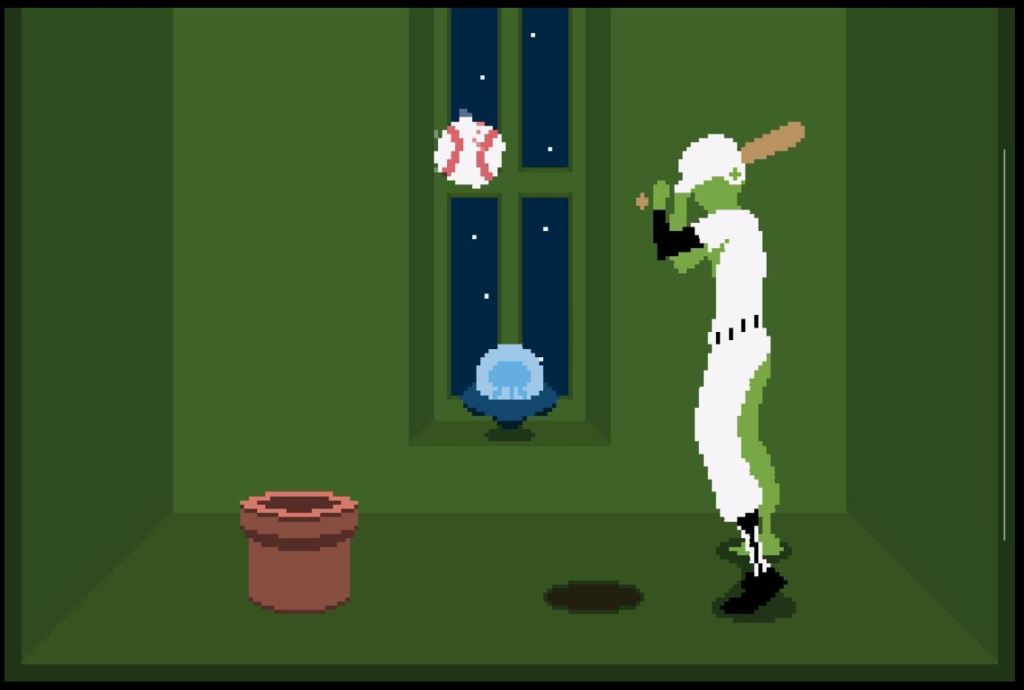
Trampolinists, quiz show hosts, marching soldiers, micro-biologists, tweezers… Rhythm Tengoku has a seriously eclectic collection of playable characters, all moving to their own beat. The challenge here is learning that rhythm, then executing a flawless performance of button presses. Each stage lasts a couple of minutes, but that leaves plenty of opportunity to flub your lines.
Progressing through each stage demands surprising accuracy, but really nailing a troublesome sequence is properly rewarding. Get through enough stages and you unlock a remix stage. These longer stages, stitch multiple challenges into one, swapping backwards and forwards, sometimes just for one beat, while plenty of new twists keep the deluge of rhythmic button presses fresh.
Rhythm Tengoku is a brilliant, snackable game, packed full of challenge and surprise. Exploring this first iteration has me excited to take a look at later Rhythm Heaven games, including the upcoming release planned for Switch.
March
The Legend of Zelda: The Minish Cap
Game Boy Advance
A load of old hat?
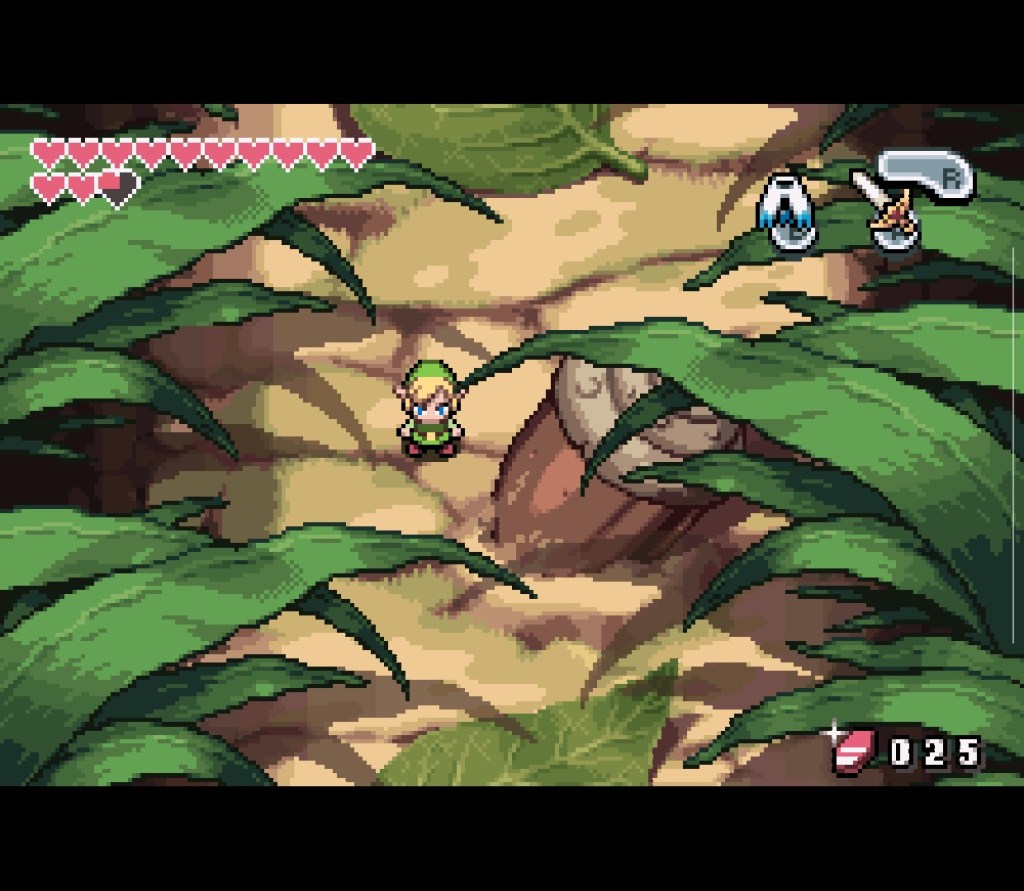
I’ve always thought of Minish Cap as being a bit twee… and it is, a little. What’s most striking about it though, even decades after release, is just how good it looks. Lush pixel art and characterful animations contribute to the feeling of a controllable cartoon. But, don’t be deceived, beneath the charm, Minish Cap is a tough little game.
This is a Zelda in the classic sense, a linear game gated by items and abilities, but given that, it’s surprisingly hands off. You won’t find waypoints or quest logs, instead destinations and challenges are described broadly, relying on players to explore the map and its inhabitants to intuit what should come next. It’s a refreshing reminder that this was once the norm, before the days of souls-likes and Metroidvanias felt like they were bucking the trends of modern focus grouped game design.
While the overworld map is quite small, one hub town and a few spoke destinations, the space to explore is effectively doubled by Link’s ability to shrink to the size of a mouse. In this form shallow water and tall grass become unexplorable, but hidden pathways behind bookcases, or among the rafters introduce new layers of discovery. Minish Cap is at it’s best when it presents locations through this new lens, with enormous blades of grass drooping across your path, and fallen leaves used to sail over water. It’s disappointing, then, that there isn’t too much of that, and often a dungeon in miniature will be indecipherable from any other.
There are a few other missteps, a bunch of puzzles requiring Link to duplicate distract from what should be the main focus (the shrinking!). Then there are Kinstones, collectible half medallions that can be combined with those owned by other characters to change the overworld in some way, opening shortcuts, dropping chests, etc. It seems to be a mechanic added to artificially inflate the run time, but without any in game context of what these items are and why they’re significant.
Despite that, The Minish Cap has been a great game to discover, and has definitely inspired me to seek out some other older games that passed me by, even if it doesn’t quite land amongst my favourite Zelda games.
February
Cairn
Playstation 5
Peak performance

When you’re climbing in Cairn, there isn’t any need for meters or bars. It’s very easy to read the danger you’re in. Glancing down will warp the field of view, making that drop seem all the further. Aava’s limbs tremble under the strain of insecure footing, and as the last of her grip runs out, the colour drains from the screen. A warning that couldn’t be clearer, the next few seconds are crucial. Do you gamble on finding a spot to rest, a panicked scramble across the rock? Or stay put and place a piton, watching helplessly as Aava tries to set an anchor in time?
The sense of peril is palpable, and each section of climb feels perfectly tuned to test your grit. Pitons act as flexible checkpoints, but managing where to place them only adds to the dramatic nature of the ascent. Do you place one now that you’ve passed that tricky overhang? Or do you hold out and make sure you have enough for the latter half of the climb? Planning your route is important, with viewing options and overalys that help identify clear paths, but you’ll need to be adaptable too. Obstacles, gradients, weather and surfaces all change to provide extra challenge as you climb.
Reach a plateau, and you can finally rest. But it’s here that you’ll need to focus on recovering Aava’s cut and torn hands. Some time in her bivouac will restore fatigue naturally, but as time passes, Aava gets hungry and thirsty. Allowing either to reach critical levels will speed up her declining reserves. Along her ascent Aava can find forgotten bottles, streams, and freeze dried food dropped by other climbers, though in diminishing volume the higher she gets. Managing Aava’s condition dovetails with the diffculty of the climb, systems and mechanics synchronised to create a sense of urgency. A desperation to complete the climb that mirrors Aava’s own.
As much as this is a movement simulator, it’s also an exploration of Aava’s motivation as she bids to become the first person to complete an ascent of Mount Kami. This is mostly delivered through Aava musing to her trusty belay bot, which I often found obtrusive. Her words cutting through the solitude of the climb, often in service of a message that felt unneccesary. But, by the end of her journey, I felt like I had a good understanding of who Aava was. When presented with ending defining choices, I was able to roleplay Aava’s decision making, culminating in an emotional pay off that felt earned.
But then, decisions throughout Cairn invite you into Aava’s psyche. Each item you leave, every route not taken, expands the possibility space. The sacrifices that makes your journey singular. Cairn is defined by decisions big and small, and the aftermath will leave you with plenty to reflect on.
January
Marvel’s Spider-Man 2
Playstation 5
Peter Out

Spider-Man 2 is at its absolute best when our Spider-Men are soaring through the Manhattan skyline at breakneck speed. Navigating Insominiac’s New York continues to delight, while new tools, like the web wings, allow for a more expressive journey as you glide far above the population.
Upon arriving at your destination, though, you’re greeted either by a story sequence meant to endear you to its plastercine pople, or a copy/paste combat sequence that doesn’t offer enough innovation over either of Spideys’ initial outings to ever feel compelling. Momentum is slammed to a halt by missions where abilities are constrained, encounters are repeated, or worse, you’re forced to play as a grounded supporting character.
Double the Spider-Men means double the skills, and double the core cast, but probably means your half as invested in the stories of either. Maybe, Spider-Man 2 is just two Spider-men too many.


 One More Go