
We’re hoisting up the shutters, and switching on the lights. One More Go is back for 2024 and what better way to open the new year than a ramble through the opening hours of Baldur’s Gate 3. Having spent the Christmas break mostly with friends and family, there hasn’t been a huge amount of time for video games. Though just as the holidays were winding down I picked up two games before the festive sales were over, Star Wars: Jedi Survivor (more on that in the future) and Baldur’s Gate 3. I’ve spent all year listening to people wax lyrical about BG3, so that was the game I booted up first, excited to finally lose myself in the world of Faerun and get up to all the kinds of mischief I’d been promised.
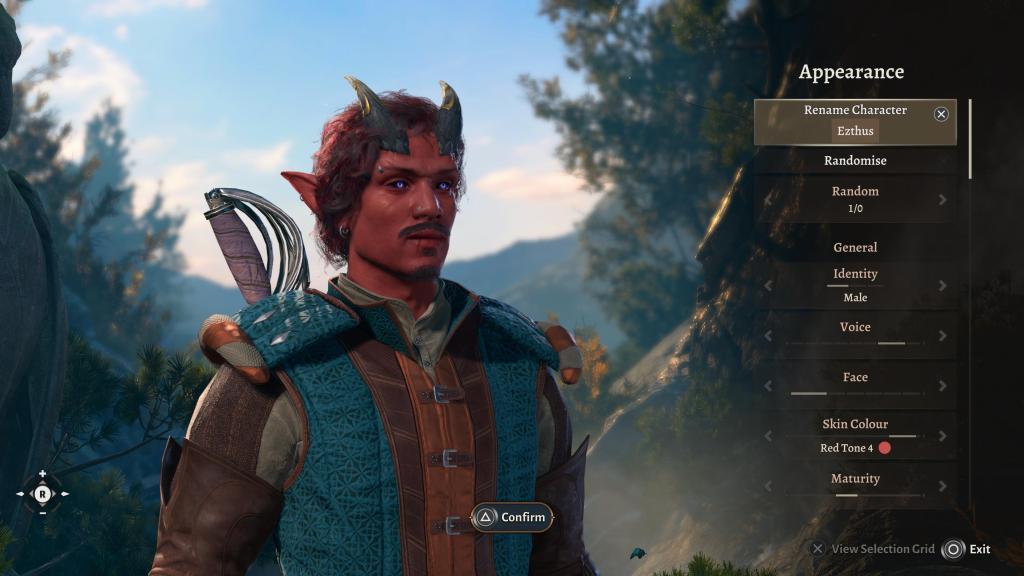
Baldur’s Gate 3 is a Dungeons & Dragons game, and as with all D&D campaigns, my first hour or so was spent creating a character I thought would be fun to play. Jumping between the character creator and class selection screens while Down By The River wormed its way into my psyche. You may think an hour seems like a long time to spend tinkering in the character creator, but ultimately, if you’re going to spend 60 hours playing through a campaign, you want a character that will keep you invested in the story. I know from my time playing D&D that I’m not a huge fan of juggling spells and managing spell slots, so I opted for something a little more straightforward. Hoping to play a character that avoids as much combat as possible I created a rogue charlatan, a cheeky chappy who’s not afraid to throw someone else under the bus to avoid a spot of bother himself.
With a character decided I was finally able to start playing, and it didn’t take long before meeting other characters who wanted to ally and work together. Immediately my attempt to avoid confusing character classes was out the window. In a typical D&D campaign you only need to learn the mechanics and levelling paths of your own character, but BG3 asks you to learn several and manage them all at once. Each time I faced a level up screen, rather an excitement for the new abilities I’d unlock, I felt a little dread at having to research all the different options and make sure I was building characters that would ultimately be effective. In the first combat encounter outside of the tutorial my entire party was killed, so already I was left wondering whether I’d made mistakes, if there was something I was missing, or if I needed to balance the party a little better. I think a mixture of all three was probably the most likely, and I’ve been much more careful in the run up to any potential combat since!
New party members come thick and fast in Act 1 of BG3, and you’re left with a lot of decision making around who you take with you and who gets left back at camp. Sometimes it’s easy, you probably don’t want two rogues in your party, but in my case that meant leaving behind one of the more fun and interesting companions. Other times your left trying to work out which characters you like and who you can manage with or have to give up on entirely. It speaks to Larian‘s confidence and the strength in their writing that there are so many options to choose from, some can even be skipped entirely. In the early hours I worried about what I might be missing out on, but eventually I settled on a party composition I liked, swapping characters in and out for quests that seemed important to them.

Ultimately, the opening hours of BG3 have been very overwhelming, and if not for the unanimous praise it’s received over the last year, I think I would have put it down. I’m not sure that’s criticism I could level entirely at Larian’s feet, I think a lot of the complexity comes from D&D itself, character creation alone offers 11 races and 12 classes for players to choose from. BG3 is a very dense game, both in its systems and its interface, but it allows players to solve its various challenges however they want. To offer that level of flexibility it’s almost inevitable that systems become complex and screens become a little cluttered. I’m surprised that so many players have battled through those early hours, and am impressed that despite a rough introduction the game has garnered so much success.
It takes a lot of effort to break through the initial crash of information, but once you fall in step with its rhythm, the complexities and awkwardness fade into muscle memory, and you’re able to focus more on the narrative and characters. As in D&D each session of play begins to feel like a series of mini adventures all contributing to a grand campaign, complete with their own arcs and place in the wider world. It’s been a battle, but I’m excited to continue on and see how my thoughts on Baldur’s Gate 3 evolve over the many hours I have left to go.


 One More Go
Leave a comment